
Starting a D2C Jewelry Brand - The Learnathon Podcast Episode 1
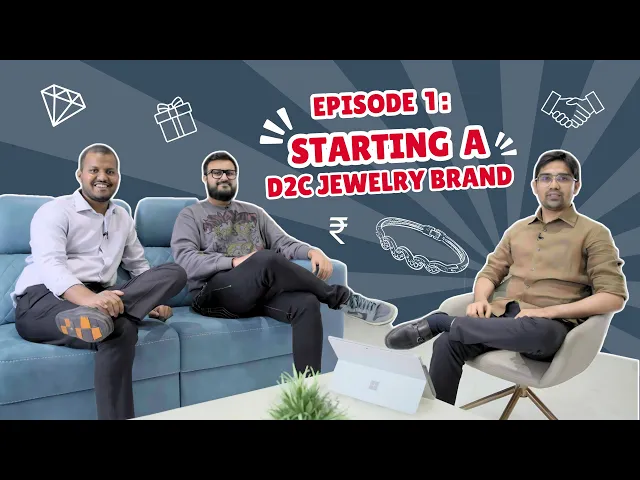
In this first episode of The Learnathon Podcast, we dive deep into the journey of starting a D2C jewelry brand. From the initial idea to real-world challenges and key strategies, this episode is packed with actionable insights for aspiring entrepreneurs. Whether you’re planning to launch your own brand or grow an existing one, this discussion covers important lessons in storytelling, customer acquisition, and building a successful business foundation.
Watch Time :
1 hr 28 min
Date :
In this episode, we cover:
Why storytelling matters in your brand strategy
How to approach customers in early stages
The mindset behind building a sustainable D2C business
Steps to validate your product idea
Key lessons from real brand founders
If you aspire to build a successful jewelry brand, strong technical knowledge is essential. Explore our industry-recognized programs:
Prapanj Kota and Hrishit Parikh are redefining how India’s jewellery businesses grow and scale.
As CEO of REIA Diamonds, Prapanj Kota is driving a bold expansion towards 300 stores, with a sharp focus on building strong teams and powerful brand storytelling. Hrishit Parikh, founder of Hrish Parikh, is taking boutique luxury to the global stage by blending fine craftsmanship with e-commerce–led growth.
Both are alumni of J K Diamonds Institute of Gems & Jewelry, where the Polished Diamond Graduate Program shaped their industry insight and real-world business vision—helping them build jewellery brands ready for the future.
Introduction of Guests and Brands (0:01-2:46):
Prapanj Kota (REIA Diamonds): Focuses on lab-grown diamond exclusive jewelry, operating three stores in 11 months, and aiming for 300 stores in five years. His model is franchise-based, where the franchise owns the outlet, and REIA Diamonds operates it, which helps with working capital challenges. He started with his own savings and no family financial backing.
Hrishit Parikh (hrishparikh.com): Offers both natural and lab-grown diamonds, aiming to educate consumers about diamond quality and providing customizable options. He identified a gap in the market where consumers are often unaware of what they are buying from traditional jewelers due to multiple intermediaries in the supply chain.
Business Model and Scaling (2:51-11:13):
Franchise Model: Prapanj explains how the franchise-based model allowed REIA Diamonds to scale quickly by mitigating working capital issues, especially crucial for physical retail jewelry stores that require significant inventory.
Customer Education: Both guests emphasize the importance of educating customers. REIA Diamonds has an "experience center" in their stores (10:06) to educate customers about the difference between lab-grown and natural diamonds. Hrishit's brand focuses on providing options and explaining color and clarity to customers (7:25).
Marketing and Market Strategy (13:35-20:24):
Storytelling and Marketing: The speakers highlight the significant role of marketing and storytelling in the demand for lab-grown diamonds (14:34). They discuss how influencers have driven awareness.
Tier 2 vs. Tier 1 Markets: Prapanj shares insights from opening a store in Guwahati, a Tier 2 city, which was an "eye-opener" (15:52). He found that Tier 2 markets are more open to experimenting with designs and are willing to spend on luxury, sometimes more so than Tier 1 cities.
Digital Consumer Behavior: They discuss the difference in consumer behavior on digital platforms between Tier 1 and Tier 2 cities (16:49). Google searches (high intent) vs. Meta ads (low intent/branding) are explored, with Tier 2 cities showing faster decision-making (19:09).
Capital Deployment and Funding (22:16-32:17):
Bootstrapping vs. Investors: Hrishit's brand is bootstrapped and prioritizes profitability over rapid scaling, aiming for sustainable growth (22:47). He would consider growth capital from investors only after the entire platform and structure are ready.
Distribution as a Goal: Prapanj's goal is primarily distribution (25:52), focusing on expanding through offline channels with online discoverability. He plans to continue financing through franchising but acknowledges the challenges of dealing with franchise investors and ensuring returns.
Future Funding: REIA Diamonds is looking at strategic partnerships or angel rounds to sustain until they reach their "MVP for growth" (29:32) and then seek proper funding.
Vendor Management and Manufacturing (33:17-40:50):
Finding the Right Vendors: Both agree that finding the right vendors and manufacturers is a significant challenge.
In-house Design and CAD: REIA Diamonds emphasizes their in-house design and CAD team (37:42) to ensure differentiated products and quality control during manufacturing.
Quality Control: Hrishit explains that they work with multiple manufacturers, including those in Surat and Bangkok, to ensure specific qualities and designs for different types of jewelry, such as natural solitaire diamonds with patented settings (39:07). He stresses the importance of thorough inspection processes.
Optimizing Manufacturing Time: Both brands highlight having their own designs, CADs, and renderings ready to reduce manufacturing time for custom orders (40:29).
Who is this podcast relevant for?Aspiring jewellery founders and D2C entrepreneurs seeking foundational insights on brand launch and growth.
Small business owners and jewellery designers interested in building direct-to-consumer strategies.
E-commerce and marketing professionals looking for real-world lessons on customer acquisition and brand positioning.
Business students and startup leaders focused on operational systems, early-stage scaling, and industry best practices.
Download our free jewelry business & design eBooks for deeper learning.
Recent Videos
LEARN FROM INDIA'S #1 JEWELRY BUSINESS EXPERTS
J K Success Stories