

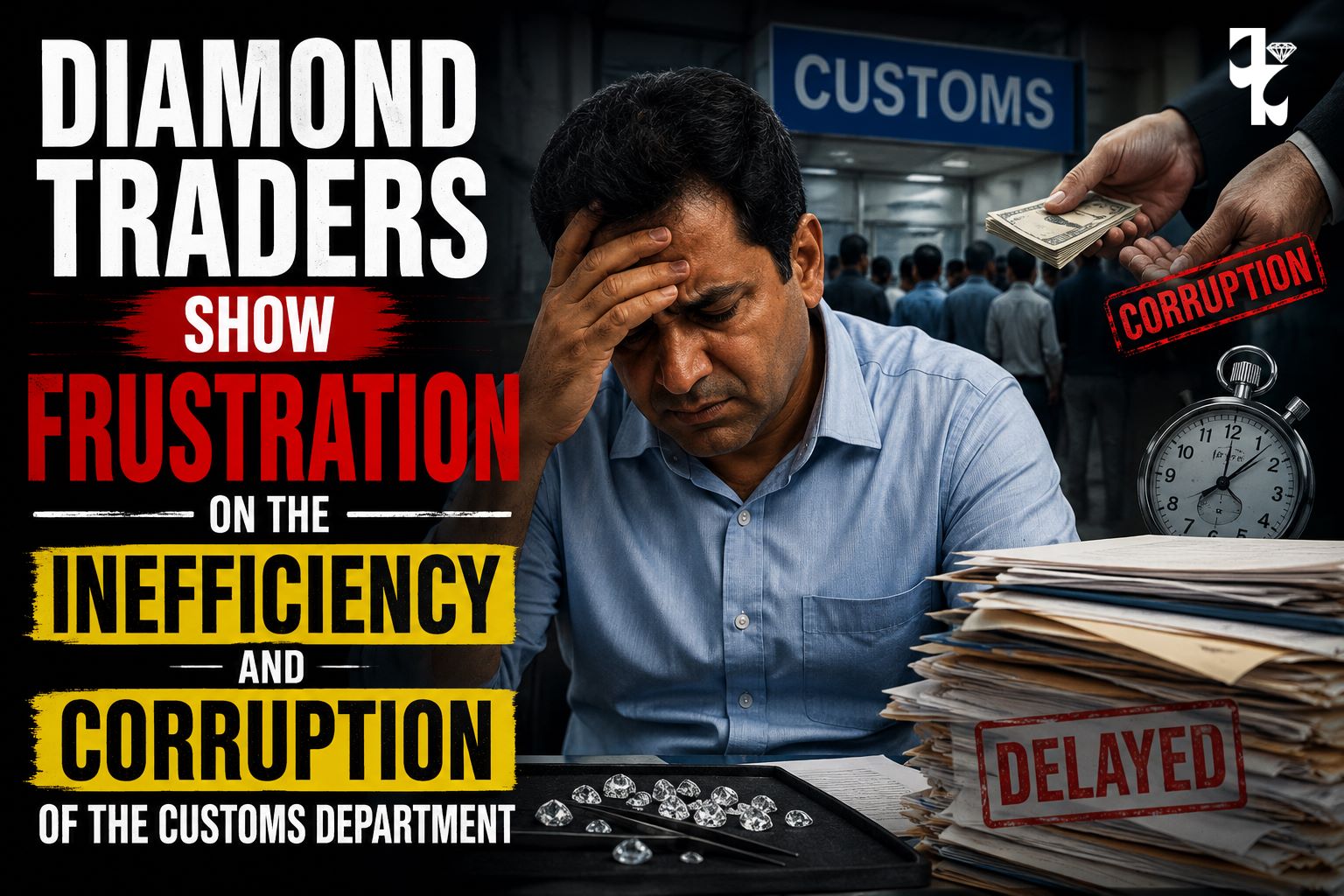
A viral reel posted by diamond exporter @diamonds.mke in early June 2026 captured a frustration that many in India's trade community recognised immediately. A shipment sent from India to the US on May 19th, with correct paperwork and a waiting customer, had still not arrived by June 3rd. Four orders were cancelled, customs gave no clear timeline, and the exporter was left absorbing the reputational damage. The comments section filled up fast, making it clear this was not an isolated experience.
What most exporters did not know at the time was that India's Customs Department had suffered a failure in its Express Cargo Clearance System (ECCS), the digital platform that handles all international courier shipments, just days before that reel was posted. It was the second outage that month. Courier operators at major airports across India could not submit basic clearance documents, and CBIC had to issue emergency instructions to switch to manual processing. (Source: Maritime Gateway, June 2, 2026)
This Did Not Start in 2026
The frustration visible in that reel has been building for years.
India cuts and polishes roughly 90% of the world's diamonds by volume, making it the largest diamond processing hub globally. Yet trade professionals have long complained that the customs environment makes doing business unnecessarily difficult.
As far back as the late 1980s, investigative reporting exposed corruption and malpractice at Indian ports and airports. The patterns documented then, including arbitrary inspections, misclassification of goods, and demands for unofficial payments, have resurfaced repeatedly in the decades since.
The Industry Begins Pushing Back Formally
By 2018, the pressure had grown significant enough that industry sources were citing frequent customs scanning and import duty disputes as direct reasons why diamond processing work was moving to China and Vietnam. India's position as the world's dominant diamond processing centre was being described as under threat, partly due to the customs environment. (Source: Business Standard, 2018)
In August 2024, GJEPC, India's apex gems and jewelry trade body, formally met with CBIC officials to raise specific concerns. These included retroactive show cause notices demanding customs duties on diamond imports that had already cleared years earlier, and requests to fix classification errors that were inflating costs for exporters unfairly. (Source: FashionNetwork, August 2024)
The Tipping Point: Late 2025
The conversation shifted from industry meetings to public outrage in October 2025, when Chennai-based importer Wintrack Inc. publicly accused Chennai Customs of 45 days of harassment and repeated bribe demands. The company announced it would suspend operations in India as a result, and the Finance Ministry was forced to order a formal inquiry. (Source: News on Air, October 2025)
The case went viral across social media and encouraged traders, importers, and exporters from multiple industries to share their own experiences openly, many for the first time.
Where Things Stand in 2026
Against this backdrop, the ECCS system outages of May and June 2026 landed at a moment when the trade community was already sensitised and vocal. Exporters dealing with stuck shipments, no system access, and zero communication from officials found a large and frustrated audience ready to engage.
The reel by @diamonds.mke was one of many. The specific detail that resonated most widely was not just the delay itself, but having to explain basic diamond terminology to officials making decisions on whether a shipment could move. That detail reflects a concern GJEPC has raised formally: that customs officials handling specialised trade often lack the product knowledge needed to make efficient, accurate decisions.
What Exporters Are Saying
The comments on the reel brought out specific experiences from across the trade community. The following are shared as reported on social media and have not been independently verified, but reflect a pattern consistent with documented industry concerns.
One diamond exporter shared that their shipment had been stuck for three months, and noted that customs officials appeared unfamiliar with diamond valuation and standard business terminology, leaving the business owner to absorb losses during a period when market prices had already declined significantly.
Another exporter pointed out that the same international courier company that takes 12 or more business days to deliver from India can deliver from Australia to most countries in around 7 business days, suggesting the bottleneck is at the Indian end, not with the carrier.
A third raised a lesser-known but serious issue: exporters participating in international exhibitions are required to prepare a detailed list of every single stone in their consignment, a process that takes 20 to 30 days. Many exporters are now skipping international trade fairs altogether because of this requirement, directly limiting India's visibility in global markets.
One exchange in the comments summed up the core issue clearly. When a commenter said that stuck shipments cause major setbacks for small businesses, @diamonds.mke responded: "The delay isn't the real problem. The real problem is that exporters bear the cost of inefficiencies they have no control over."
Another commenter captured a policy contradiction worth noting: while the government discourages imports to protect domestic industry, it has not moved with equal urgency to remove barriers for exporters who are bringing foreign currency into the country.
What This Means for Trade Professionals
Exporters need more than knowledge of diamonds. They need to understand shipping documentation, HS code classifications, and customs regulations. When a shipment is delayed, the exporter is the person the customer holds responsible, regardless of where the fault actually lies. A solid understanding of trade processes and terminology is what allows professionals to navigate these situations confidently and protect their reputation in international markets.
Author


Oct 14, 2026
Industry Insights

Sep 15, 2026
Industry Insights

Sep 10, 2026
Industry Insights

Jul 9, 2026
Industry Insights


