


Sardonyx Gemstone Guide: Identification, Astrology, Grading & History
Date :
Read Min :
Sardonyx is one of the oldest and most historically significant gemstones in the world a banded variety of chalcedony prized by ancient civilisations, revered in Vedic astrology, and still sought after by collectors and jewellery enthusiasts today. Because beautiful, high-contrast sardonyx is rare and commands premium prices, the market is frequently flooded with imitations and heavily treated stones.
Whether you are looking to purchase a certified gem, explore its astrological significance in Jyotish tradition, or style a classic signet ring, this comprehensive guide covers everything you need to know from gemological identification and grading to chakra connections and Vedic planetary remedies.
What Is Sardonyx? A Gemologist's Definition
Sardonyx is a specific variety of cryptocrystalline quartz (chalcedony) that forms when sard a deep, reddish-brown quartz naturally fuses with onyx, a black or white banded chalcedony. The result is a stone with flat, parallel colour bands alternating between warm earthy reds and crisp black or white tones.
Mineral family: Chalcedony (microcrystalline quartz)
Mohs hardness: 7
Lustre: Vitreous (glass-like)
Transparency: Opaque
Primary colours: Reddish-brown, black, white
Key origins: India, Brazil, Uruguay, Germany, USA
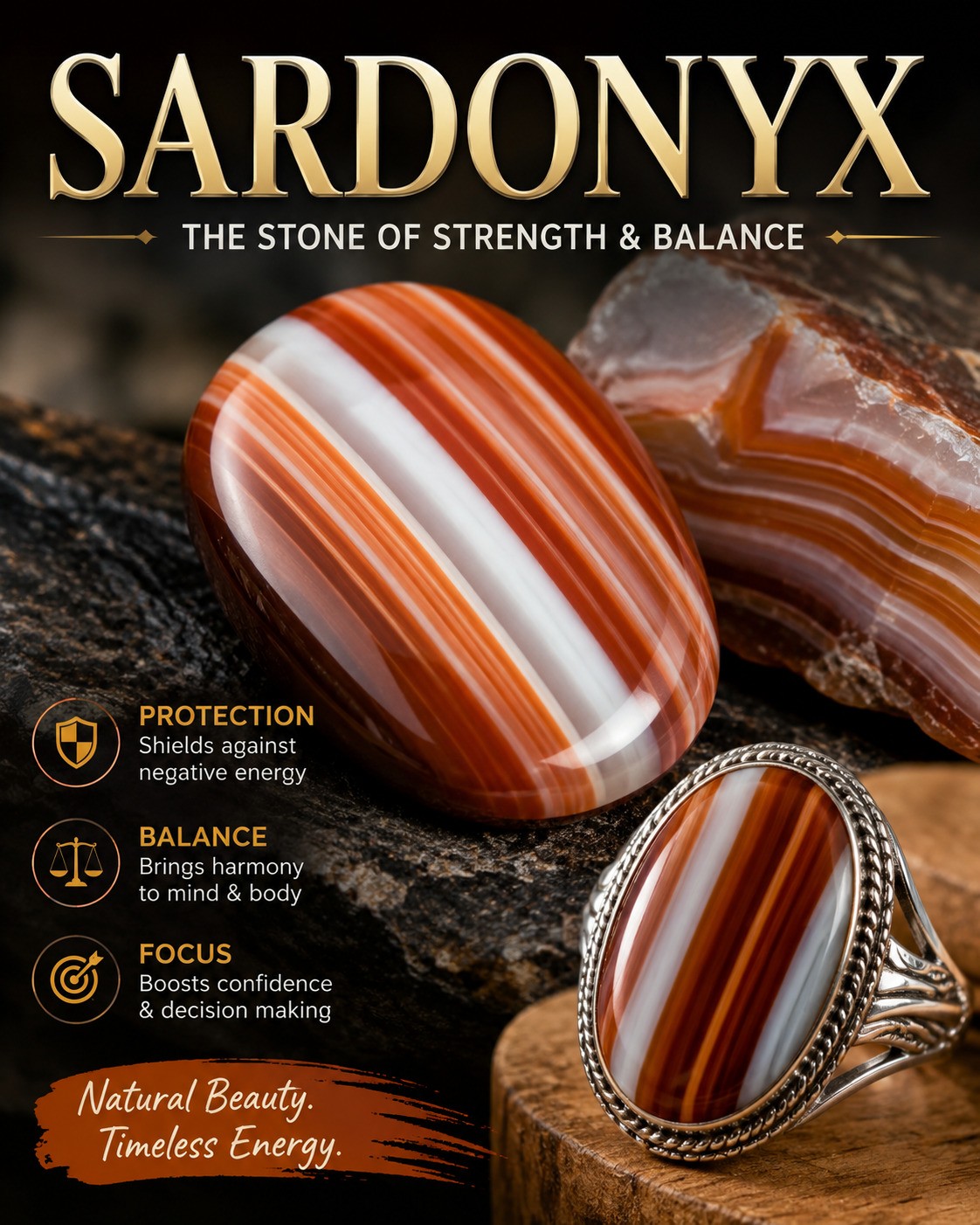
How to Identify Sardonyx Colour Bands, Hardness & Key Properties
To separate authentic specimens from clever counterfeits, professionals rely on three core field tests.
1. Band Pattern Analysis
Natural, untreated sardonyx features perfectly flat, parallel layers of colour with a muted, earthy appearance. If you notice bands that are chaotic, swirling, sharply curved, or display bright neon-like colour contrasts, you are likely looking at a standard agate that has been heavily dyed and chemically treated.
2. The Temperature Test
Sardonyx is a remarkably dense stone. Place the gemstone directly against your cheek or forehead genuine sardonyx will feel distinctly cold to the touch and will take a noticeably long time to warm up to body temperature. If a stone feels neutral or warms up almost instantly, it is likely a glass or resin imitation.
3. UV Light Reaction
Authentic sardonyx is largely inert under ultraviolet radiation. Under a gemological UV lamp tested across both Shortwave (SW) and Longwave (LW) spectrums a genuine stone should produce no glow or fluorescence. A bright, chalky, or unnatural glow strongly indicates that the stone has been stabilised with synthetic resins or treated with chemical dyes.
Professional note: A trained gemologist never relies on a single test. Band structure, magnification findings, UV response, and refractive index are always evaluated together before reaching a final conclusion on authenticity.
How Dyed Agate Is Passed Off as Genuine Sardonyx
One of the oldest tricks in the gemstone trade is passing off cheap, dull-banded grey agate as high-grade sardonyx. This is achieved through a multi-step chemical treatment process designed to fool the untrained eye.

The chemical treatment process works as follows:
Standard grey agate is soaked in a concentrated sugar solution for several days, allowing the porous layers to absorb the liquid.
The stone is then immersed in concentrated sulfuric acid, which reacts with the absorbed sugar and carbonises it turning the treated layers pitch-black to mimic natural onyx.
Finally, iron oxide (liquid rust) is introduced into the remaining layers, producing the rich reddish-brown bands characteristic of natural sard.
The result can be visually convincing at first glance, which is why careful magnification and gemological testing are essential to confirm whether colour and banding are natural or artificially enhanced.
What to Look for Under the Loupe
Examining a stone under a 10x jeweller's loupe reveals telltale signs that distinguish natural sardonyx from treated imitations:
Bleeding and Fracture Staining: In a chemically dyed fake, you will see noticeable pools and concentrated streaks of dark dye bleeding into the stone's internal micro-fractures and cracks. Natural sardonyx has clean, sharp colour boundaries without these synthetic concentrations.
The Cross-Section Test: Authentic sardonyx displays rich, deep colour that permeates uniformly through the entire crystal structure. Dyed fakes typically only carry surface-level colour. When cut, polished, or viewed from a broken angle, they often reveal a dull grey or milky-white interior core evidence that the chemical treatment failed to reach the centre of the stone.
Sardonyx vs. Onyx vs. Carnelian: Key Differences Explained
Because all three gemstones belong to the chalcedony family, confusion in the marketplace is extremely common. The table below highlights the key distinctions:
Property | Sardonyx | Onyx | Carnelian |
Mineral family | Chalcedony | Chalcedony | Chalcedony |
Colour | Alternating reddish-brown, black, and white bands | Solid black, or black with white bands | Uniform orange to reddish-brown |
Banding | Distinct flat, parallel multi-colour bands | Parallel, typically two-tone | None solid colour throughout |
Transparency | Opaque | Opaque | Translucent to opaque |
Typical use | Cameos, signet rings, collector gems | Beads, cabochons, carvings | Beads, cabochons, pendants |
Mohs hardness | 7 | 7 | 7 |

How Is Sardonyx Graded?
When assessing the commercial value of sardonyx, gemologists evaluate three primary pillars:
Pillar | Criteria | What Raises or Lowers Value |
1. Colour Profile | Sard layer hue; onyx layer contrast | Vivid, deeply saturated reddish-orange sard layers and stark opaque white or solid black onyx layers indicate high grade. Dull, muddy, or milky tones lower the value. |
2. Banding Precision | Straightness, alignment, layer thickness, boundary definition | Premium sardonyx has flat, straight, parallel bands with sharp, abrupt colour transitions. Wavy, chaotic, or blended zones grade poorly. |
3. Overall Quality | Lustre, clarity, lapidary cut, symmetry | The stone must take a brilliant vitreous polish, be free of eye-visible fractures, and be cut en cabochon or carved into cameos with a perfectly proportioned dome. |
Sardonyx in Vedic Astrology, What Jyotish Says About This Ancient Gemstone
While the gemological market values sardonyx for its crisp, well-defined layering, the spiritual and astrological community values it for a different set of reasons: its long-held reputation for anchoring energy, sparking creativity, and offering personal protection.
Meaning, Healing Properties & Chakra Connections
In crystal healing traditions, sardonyx is considered a premier stone for harmony, protection, and emotional stability. It is believed to combine the warm, courageous energy of sard with the disciplined focus of onyx, acting as a stabiliser for scattered emotions. Many practitioners turn to it for boosting self-confidence, inspiring motivation, and improving communication in relationships.
Unlike many crystals associated with a single energy centre, metaphysical traditions suggest sardonyx works across two chakras simultaneously.
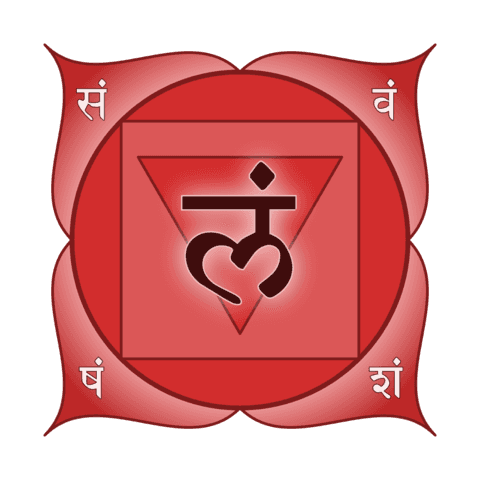
Root Chakra (Muladhara)
Property | Detail |
Location | Base of the spine |
Colour | Red |
Element | Earth |
Significance: In chakra philosophy, the Root Chakra is viewed as the foundation of the entire energy system governing core feelings of safety, security, and stability, and symbolically connecting a person to the Earth.
Sardonyx and the Root Chakra: Many practitioners believe sardonyx acts as a spiritual anchor, radiating a grounding earth energy that eases floating anxiety or panic. Common uses include carrying a tumbled stone in a pocket, wearing it as a ring, or keeping a piece on a desk during high-stress workdays.
Meditation technique: Sit comfortably holding the stone. Close your eyes, breathe deeply, and visualise a warm red light radiating from the crystal into the base of your spine, anchoring you to the earth.
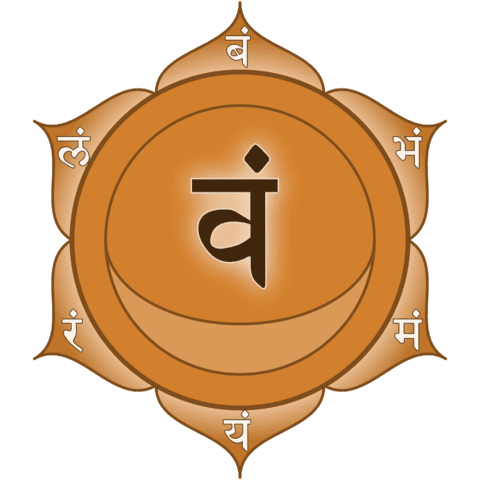
Sacral Chakra (Svadhisthana)
Property | Detail |
Location | Lower abdomen, approximately two inches below the navel |
Colour | Orange |
Element | Water |
Significance: The Sacral Chakra is regarded in energy healing traditions as the personal centre for creativity, pleasure, and emotional balance tied to relationships, intimacy, and joy.
Sardonyx and the Sacral Chakra: Practitioners suggest that the fiery red and orange bands within sardonyx can spark passion and creative expression, acting as an energetic clearing agent for artistic blockages. Placing a piece in your workspace or wearing it near the lower abdomen is a common practice for supporting emotional flow.
Meditation technique: Lie down and place a polished sardonyx stone on your lower abdomen. As you breathe, visualise a warm orange stream of energy releasing emotional stagnation and filling your body with creative inspiration.
Sardonyx for Aries and Leo: A Fire Sign's Grounding Stone
Sardonyx is a traditional birthstone for August. Within astrological circles, it is believed to have a particularly strong resonance with the bold, ambitious natures of Aries and Leo offering the grounding influence that fire signs are said to benefit from most.
Aries (March 21 – April 19)
Ruled by Mars, Aries individuals are viewed as natural trailblazers who can sometimes struggle with impulsivity. Sardonyx is traditionally associated with three believed benefits for this sign:
Grounding: Believed to balance intense energy and support deliberate execution of bold ideas.
Focus: Thought to calm a racing mind, encouraging considered decisions over impulsive reactions.
Stamina: Historically referred to as a "warrior stone," trusted by enthusiasts for building the mental endurance needed to complete long-term projects.
Leo (July 23 – August 22)
Ruled by the Sun, Leos are traditionally seen as charismatic, bold leaders whose intensity can at times tip into stubbornness. Believed associations for Leo include:
Communication: Historically linked to public speakers, believed to encourage clear, calm, and persuasive speech.
Cooling effect: Astrological tradition suggests it can ground Leo's fiery nature, cultivating patience and humility.
Protection: Just as Roman soldiers historically wore sardonyx into battle for protection, modern practitioners often use it symbolically as a shield against negative workplace environments.
Sardonyx in Vedic Astrology (Jyotish): Mars and Saturn Remedies
In Indian Vedic Astrology (Jyotish), sardonyx is largely overlooked which makes it a significant hidden gem for planetary remedies. Because of its unique dual-banded structure, it is believed to bring two major planetary influences into balance simultaneously.
Mars (Mangal) and Saturn (Shani) Alignment
Mars energy: The rich red and brown bands of sardonyx resonate with the planet Mars. For individuals with a weakened Mars placement, the stone is believed to supply physical stamina and raw courage.
Saturn energy: The white and dark onyx bands align with Saturn's energy. Practitioners recommend it as a supportive stone for those navigating Sade Sati the intense 7.5-year Saturn transit for its perceived qualities of discipline and protection.
How Practitioners Wear and Activate Sardonyx
Guideline | Recommendation |
Metal | Set in Silver or Panchdhatu (traditional 5-metal alloy) |
Finger | Middle finger (Saturn) or ring finger (Mars/Sun) |
Day and time | Tuesday morning (Mars) or Saturday morning (Saturn) |
Mars mantra | Om Kraam Kreem Kraoum Sah Bhoumaya Namah |
Saturn mantra | Om Sham Shanaishcharaya Namah |
Accessibility and Affordability
Unlike precious Vedic gemstones such as natural rubies or blue sapphires which carry high price tags and are believed by astrologers to cause energetic imbalances if misprescribed sardonyx is widely considered a safe, gentle, and highly affordable option for enthusiasts.
It is found naturally across India, making it readily accessible. Tumbled stones, palm stones, and customised rings are available at local crystal shops and online platforms, typically ranging between ₹200 and ₹1,900.

Connect Expert On :

Recent Blog
J K Success Stories