


Palmonas 40X Growth Story: What ₹97 Lakh to ₹39 Crore in One Year Teaches Every Jeweller
Date :
Read Min :

Most D2C brands take five to seven years to find their footing. Palmonas went from ₹97 lakh to ₹39 crore in a single financial year — and closed that year in profit, not in the red.
For gems and jewellery enthusiasts, this isn't just a funding headline. It's a working case study in "How a brand can outgrow an entire industry's playbook by refusing to play the same game".
Here's the complete breakdown — the numbers, the strategy, and what any jeweller, designer, or gemology student can actually take from it.
About Palmonas
Palmonas is an Indian D2C jewellery brand built around a category it had to name itself: demi-fine jewellery. Its products sit crafted from surgical-grade stainless steel and sterling silver, finished with an 18K gold vermeil layer — positioned deliberately between mass-market fashion jewellery and traditional fine jewellery.
The Gap Nobody Had Named
Before Palmonas, Indian jewellery buyers had two real options, and nothing in between:

That middle ground simply didn't exist in the Indian buyer's mind until Palmonas built it and gave it a name: demi-fine. And here's the interesting part — they didn't spend years running awareness campaigns to explain the category. They just built a product so good that the category explained itself.
Growth That Stunned Investors
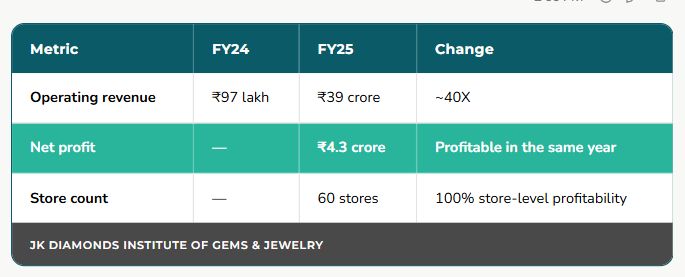
That combination — 40x revenue growth alongside real profit — is rare for any scaling consumer brand in India, let alone a jewellery D2C player. Most fast-growing D2C brands burn cash to buy growth. Palmonas didn't need to.
Strategy Breakdown: How Palmonas Actually Did It
1. Category Creation Over Category Competition
Instead of competing with incumbents on carat weight or purity certification — the terms every traditional jeweller fights on — Palmonas simply exited that conversation. It created "demi-fine" as a new shelf in the customer's mind, one where gold weight wasn't the currency of trust anymore.
Why this matters to jewellers: you don't need a bigger discount or a purer hallmark to win a customer who was never comparing you on those terms to begin with.
2. Material as the Permission Structure
The material choice wasn't just a cost decision — it was what let Palmonas compete on price without ever touching the gold-weight conversation.
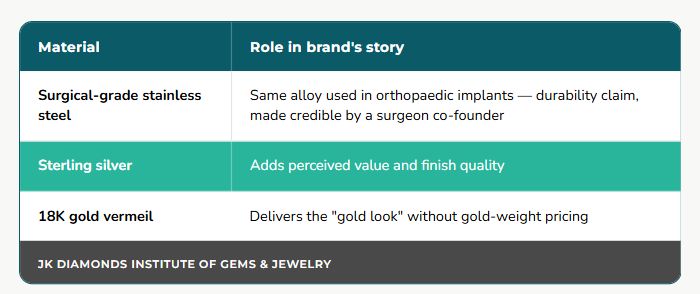
This is the part most coverage of Palmonas skips, and it's the most important lesson for a jeweller or gemology student: the material decision came before the marketing decision. A claim like "surgical-grade steel" only converts because it's factually true, not because it's a good tagline.
3. A Co-Founder, Not a Brand Ambassador
In March 2024, Shraddha Kapoor joined Palmonas as a co-founder — not as the face of an ad campaign.

The result:
82 million Instagram followers as organic reach, estimated at ₹10–20 crore a year in advertising equivalent, at effectively zero media spend. Customer acquisition cost didn't fall because of a smarter ad. It fell because the structure upstream of advertising was built differently.
4. Omnichannel, Without Retail Dependency
Palmonas built its D2C website to carry the primary revenue load — not marketplaces, not retail. It then layered on:
Its own website (D2C, first-party data, full margin)
Marketplaces — Amazon India, Myntra
Quick commerce — Blinkit
60 physical stores, expanding further with fresh capital
Why this matters: the brand controls its customer relationship on its strongest channel first, and uses every other channel as an add-on — not a crutch.
5. Demi-Fine to Fine: Building the Upgrade Path [NEW]
The demi-fine positioning isn't the end of Palmonas's story — it's the entry point to a longer one. The brand is gradually building a bridge from demi-fine into fine jewellery, using two specific levers: the introduction of 9Kt gold purity jewellery, and an early move into lab-grown diamonds. This shift matters for two reasons:

Put together, this builds a three-stage customer ladder instead of a single product line:
Stage 1 — Demi-fine (steel, silver, vermeil): low price, low friction, the reason a customer discovers the brand at all.
Stage 2 — 9Kt gold + lab-grown diamonds: the "graduation" tier — same brand, same trust, a real gold and diamond product at a price still well below traditional fine jewellery.
Stage 3 — Full fine jewellery (higher purity gold, natural stones): for the customer the brand has already earned trust with over Stage 1 and 2.
5. Retail Expansion on Unit Economics, Not Ego
Most D2C brands open stores to buy brand credibility and quietly lose money on most of them. Palmonas's co-founder was explicit about the discipline behind its 60 stores:
"With just 60 stores, a significant chunk of our revenue already comes from retail... every store is profitable."
No store opened just to look premium on a high street. Each one was expected to earn its keep from day one.
JK's Point of View
If you strip away the funding round and the celebrity name, one thing stands out: Palmonas didn't win with a bigger marketing budget. It won because its product, material, and pricing decisions were smart enough that the marketing practically wrote itself.
That's the real skill here — spotting a gap in the market, understanding which materials and designs can fill it credibly, and building a business around that instead of chasing the next big ad campaign.
One caveat worth watching: the same 60-store network that looks like a strength on paper needs a closer look on unit economics. At roughly ₹65 lakh average revenue per store against a ₹39 crore top line, the margin left for a franchisee after rent, staffing and revenue share is likely thin — and thin unit economics are exactly what have strained franchise renewals for other jewellery and lifestyle retail networks Store count and "100% store-level profitability" are a good headline, but they don't by themselves tell us whether the current store-partner economics can be sustained as Palmonas keeps adding stores. That's the piece to watch, not the store count itself.
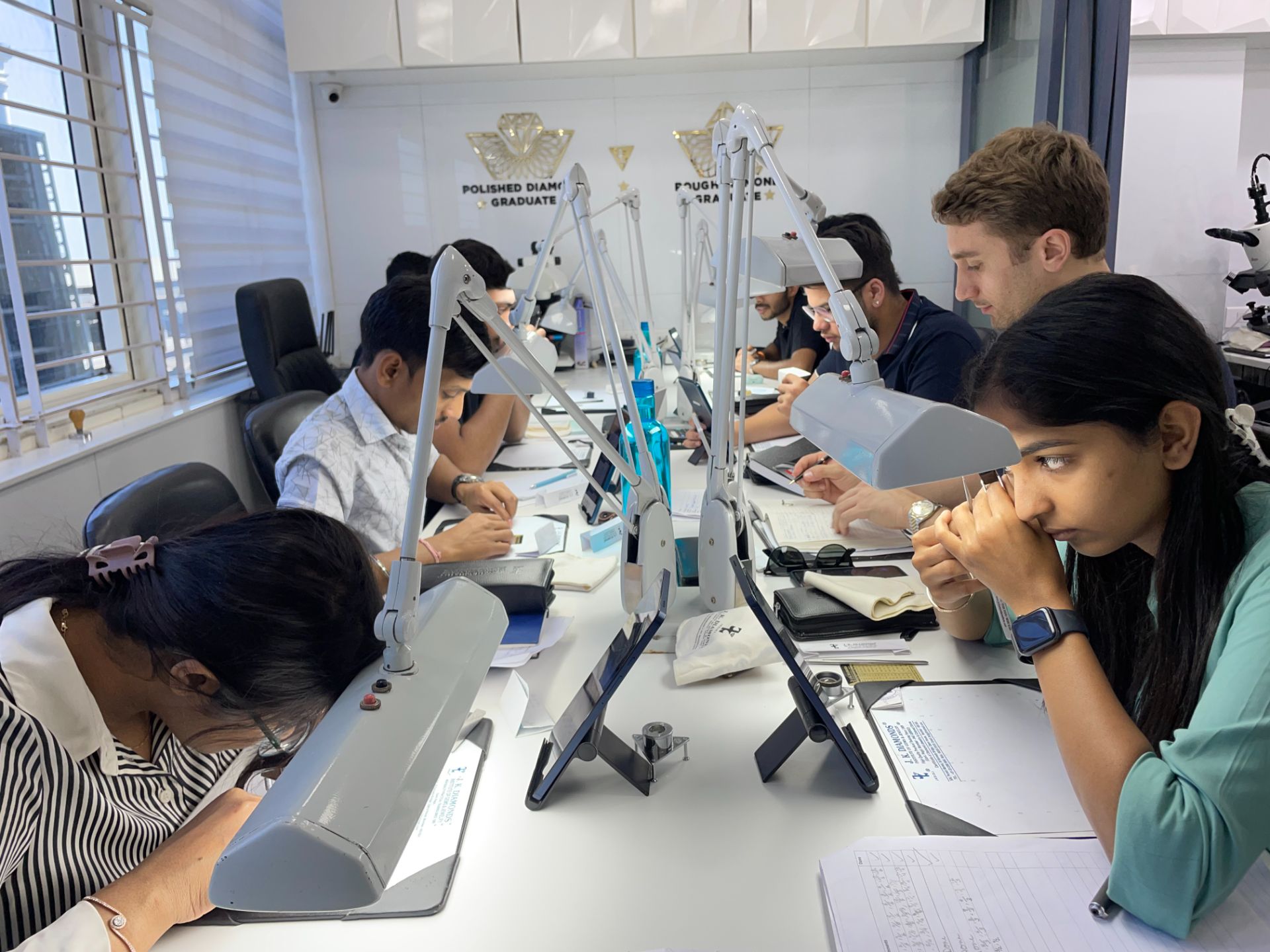
This is exactly what we dig into in the Diamond Business Mastermind Course at JK Diamonds Institute — the actual business mindset behind building a jewellery brand that lasts. How to spot an underserved gap in the market. How to price with confidence instead of guesswork. How to think about growth without burning cash to get there. It's the practical side of the business that most jewellers only learn the hard way — through years of trial and error.

Connect Expert On :

Recent Blog
J K Success Stories