


Decoding the Design DNA of Cartier, Van Cleef & Arpels, and Tanishq
Date :
Read Min :
You don't even need to see the logo.
See a screw-shaped bracelet? You think Cartier.
See a green clover charm? You think Van Cleef & Arpels.
See a heavy red-and-gold bridal set all over Instagram in wedding season? That's Rivaah by Tanishq, no doubt about it.
This kind of instant recognition doesn't happen by luck. It's not just "good design" either. It's planned — one strong idea, done right, then repeated on purpose for decades. And here's the part most blogs never tell you: this stuff makes these brands a lot of money, even today. Richemont, the company that owns Cartier and Van Cleef & Arpels, made €15.3 billion from its jewellery brands in FY25 alone — and it's now growing at 24% a year. Tanishq alone crossed ₹46,000 crore in revenue, and it's the main reason Titan Company is as big as it is today.
So let's break down how these three houses each found their "thing" — the real story behind it, some facts that don't usually show up in the typical "top iconic designs" list, and why it's still making money decades later.
Cartier: A Screw That Became a Symbol of Love
Cartier's biggest hit wasn't a diamond. It was a screw.
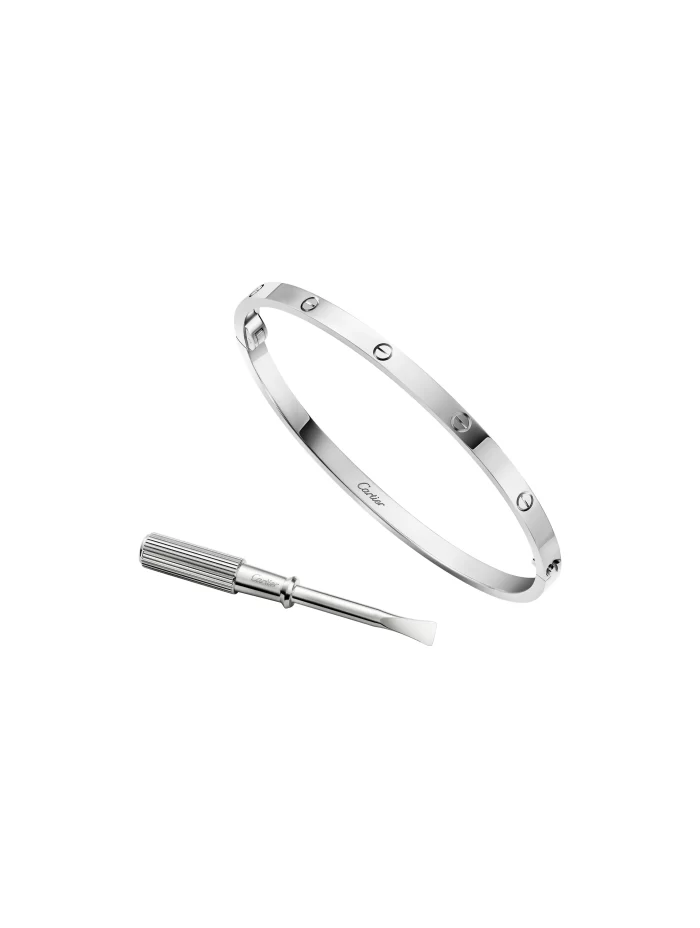
Back in 1969, a young designer named Aldo Cipullo had just joined Cartier's New York team. He came up with something odd for that time — a plain gold bangle with no clasp. Instead, it closes on your wrist with two small screws, using a tiny screwdriver that comes packed with the bracelet. You can't take it off yourself. Cipullo borrowed the idea from hardware — nuts, bolts, tools — and turned it into a symbol of commitment. That's the LOVE bracelet. It's been in production for over 55 years and it's still one of the most gifted pieces in fine jewellery today.
Then there's the panther. This one is about one woman's obsession, given the freedom to become full-blown art. Jeanne Toussaint joined Cartier in 1913, and by 1933 she was in charge of the entire high jewellery team — a rare thing for a woman to lead back then. People called her "La Panthère" because she loved the animal — panther-print coats, panther rugs at home, all of it. In 1948, the Duke of Windsor asked her to design a brooch for his wife. She made a fully 3D gold panther, mid-prowl, sitting on top of a 116-carat emerald. The Duchess loved it so much she went on to collect six more. Soon, other wealthy women wanted their own too. One brooch, and the panther became Cartier's forever symbol.

The Trinity Ring Story People Get Wrong
Here's something most blogs skip. Cartier's Trinity ring — three bands of white, yellow, and rose gold, made by Louis Cartier in 1924 — is usually said to be a gift he made for the poet Jean Cocteau. Nice story. But it's not true. Cartier's own heritage team has confirmed the ring was made as a regular stock piece in 1924, not a special order. Cocteau simply loved it later and started wearing two of them stacked together. The myth stuck around because it sounds better than the truth — which is honestly a good lesson in how jewellery legends get made.
This isn't just old money. Richemont's latest numbers show its jewellery brands growing 24% — seven quarters in a row of double-digit growth — and Cartier is the biggest reason for that. A 55-year-old bracelet design is still one of the strongest money-makers in luxury today.
Van Cleef & Arpels: A Secret Technique Nobody Could Copy
Van Cleef's story starts small — with one man picking clovers in his backyard.
Jacques Arpels, nephew of the founders, used to pick four-leaf clovers from his garden and give them to his staff as lucky charms. Just a habit, nothing planned. "To be lucky, you have to believe in luck," he used to say. That habit later became the Alhambra collection in 1968 — a clover-shaped design with a beaded gold edge, named after the Alhambra Palace in Spain because the shape also looks like the palace's stone patterns. One design, two meanings at once — luck to one person, architecture to another.
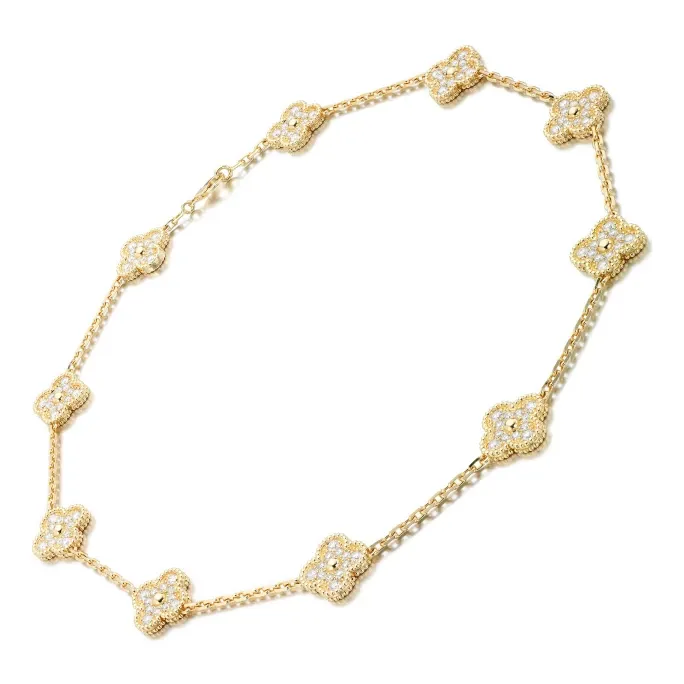
The smart part was making every Alhambra piece match every other one. Same clover shape, different materials — onyx, malachite, mother-of-pearl, diamond — so you could wear five bracelets together and nothing would clash. One shape, endless combos. The brand never had to design something new every season.
The Craft Secret: The Mystery Setting
This is the part most people don't know, and it's what really separates a designer from someone who just likes jewellery. In December 1933, Van Cleef & Arpels got a patent in France for a technique called the Mystery Setting. It lets gemstones sit side by side with no visible metal at all between them — the finished piece looks like a solid sheet of colour. Each stone is cut with a tiny groove underneath, and it slides onto gold rails thinner than 0.2mm — thinner than a hair. Other brands tried similar ideas before, but none of them turned it into a full-blown signature the way Van Cleef & Arpels did. Even today, one piece made this way can take months of work by specially trained craftsmen.
That's not just a pretty design. That's a protected secret, built right into a piece of jewellery.
Tanishq: Selling Trust Before Selling Design
Tanishq's story matters most for you, because before it could have a signature look, it had to fix something more basic — nobody trusted a corporate brand with their gold.
Titan got into jewellery in 1994, and the early years were rough. The real turning point came in 1997, when Tanishq put Karatmeters — machines that test gold purity — right inside its stores, so customers could check jewellery they'd bought years ago from their own family jeweller. A lot of "22kt" gold turned out to be closer to 19-20kt. That one move built more trust than any ad campaign could, and it's a big reason Tanishq's jewellery business today does over ₹46,000 crore in revenue and holds close to 40% of India's organised jewellery market. That scale came from earning trust first.
Rivaah: A System, Not Just a Shape
Once that trust was built, the design signature came next — Rivaah, Tanishq's wedding jewellery line. Unlike LOVE or Alhambra, it isn't one repeated shape — it's a flexible system with different designs for Haldi, Mehendi, Sangeet, and the main day, tailored to different communities across India. A good recent example is the Rivaah x Tarun Tahiliani collection, which turned the designer's signature embroidery styles into actual Karigari jewellery work — the same idea Cipullo had with hardware nearly 60 years earlier, borrowing one craft's language and rebuilding it in another.
This is the real, unglamorous skill of jewellery design — and it's exactly what we push students to learn in JK's CAD Jewelry Design Course. It's not just "can you model this shape in Rhino or MatrixGold." It's can you look at a brief and spot the one idea strong enough to become a signature, instead of just making one nice piece and moving on. That's the real difference between a designer who can execute someone else's idea, and one who can build a whole brand from scratch.

The business side of this matters just as much, and it doesn't get talked about enough either. In our Diamond Business Mastermind Program, we go straight into the tactics behind these numbers — how Cartier and Van Cleef price and position themselves so no competitor can copy the meaning behind the LOVE bracelet, even if they copy its shape. How Tanishq turned a trust problem into a 40% market lead. Design gets you noticed.
Positioning is what makes a business last fifty years.
Frequently Asked Questions
What is Cartier's most iconic jewellery design? The Cartier LOVE bracelet, designed by Aldo Cipullo in 1969, is widely considered Cartier's most iconic piece. It's a screw-fastened gold bangle that needs a small screwdriver to remove, symbolising permanent commitment.
What is Van Cleef & Arpels' Mystery Setting technique? The Mystery Setting, patented by Van Cleef & Arpels in 1933, is a stone-setting technique that hides all visible metal between gemstones, using rails thinner than a strand of hair. It's still one of the most technically difficult setting methods in fine jewellery today.
How did Tanishq become India's largest organised jewellery brand? Tanishq introduced in-store Karatmeters in 1997 to let customers verify gold purity themselves, at a time when trust in jewellers was low. That trust-building move helped it grow into a brand holding close to 40% of India's organised jewellery market.

Connect Expert On :

Recent Blog
J K Success Stories