


Kimberley Process Explained: What It Covers and What It Doesn't
Date :
Read Min :
If you are new to the gems and jewelry trade, you will encounter the Kimberley Process (KP) immediately. While often used as a catch-all for "ethical sourcing," it is actually a narrow tool with specific strengths and significant gaps.
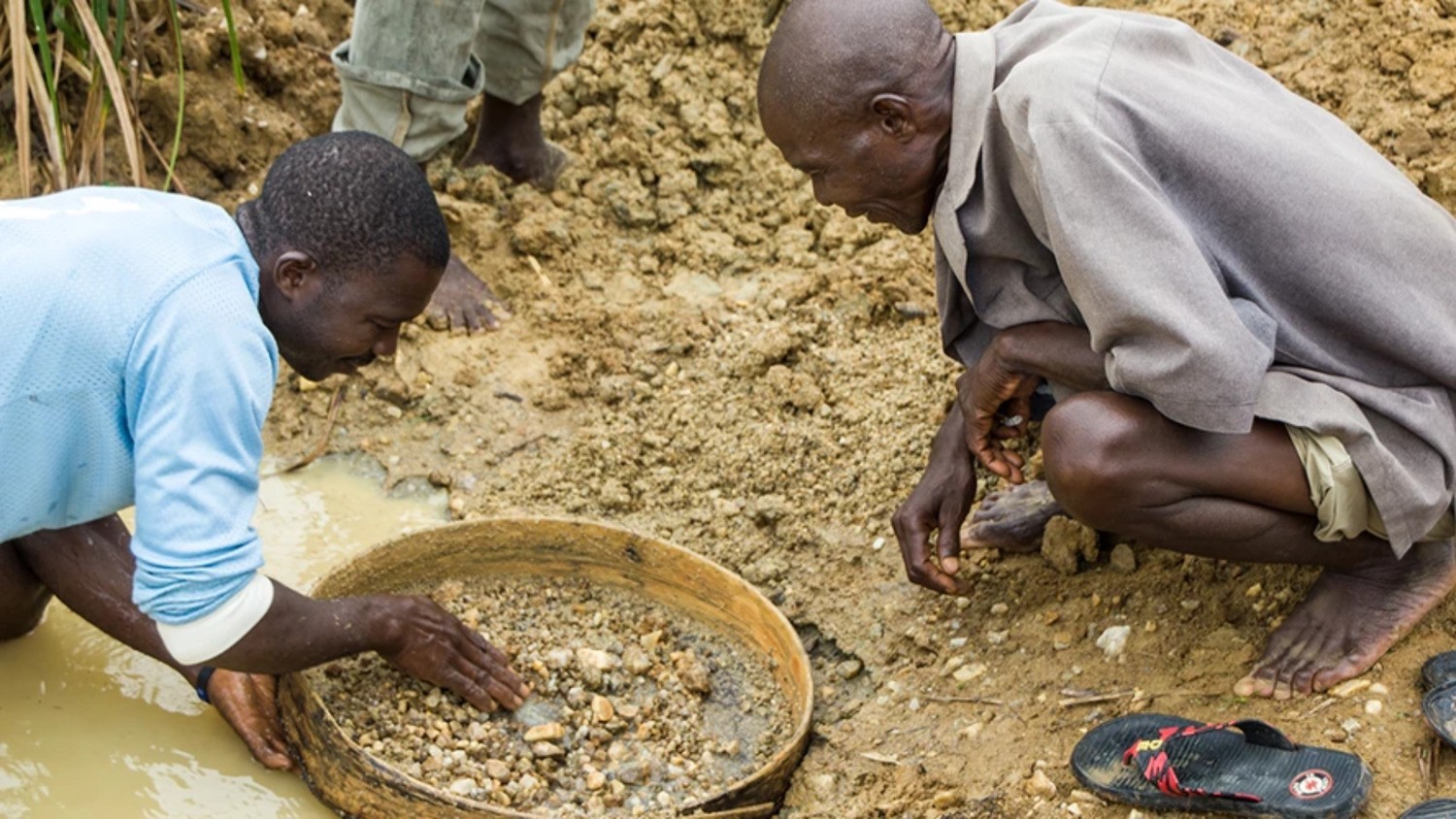
Image source: Quality Diamonds
Origin & Purpose
To understand why the Kimberley Process exists, you need to go back to the 1990s. Several African countries, including Sierra Leone, Angola, and the Democratic Republic of Congo, were fighting devastating civil wars. Rebel groups needed money to buy weapons, pay fighters, and sustain their operations. They found it in diamonds.
These groups would seize control of mining areas, force local people to dig at gunpoint, and sell the stones into the global market. The problem was simple and terrifying: a rough diamond looks the same regardless of where it came from or who suffered to extract it. A buyer in Antwerp, Mumbai, or New York had no way of knowing whether the stone on the table had funded a war.
The scale of the humanitarian crisis eventually became impossible for the industry and governments to ignore. Journalists documented it. NGOs campaigned about it. In 2006, the Hollywood film Blood Diamond, starring Leonardo DiCaprio, brought it to global audiences in a way that made the industry impossible to look away from. But pressure had been building well before the film. Governments, the diamond industry, and civil society groups had already come together in Kimberley, South Africa in 2000 to begin negotiations on a solution. By 2003, the Kimberley Process Certification Scheme (KPCS) was formally launched.
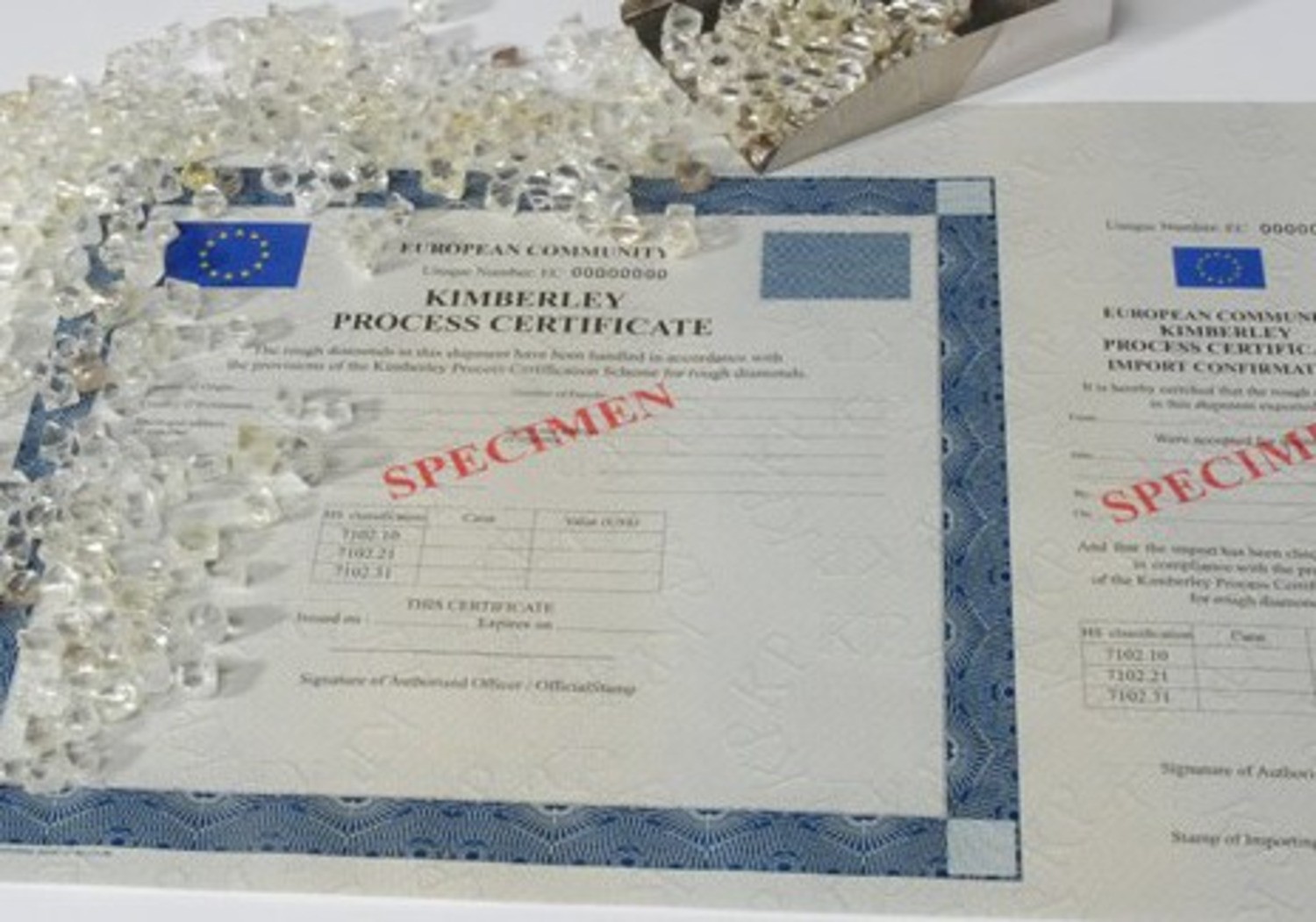
Image source: Galeries du Diamant
The scheme works on a straightforward principle. Member countries can only trade rough diamonds with other member countries. Every shipment of rough diamonds must travel with a government-issued KP certificate confirming the stones are conflict-free. Today, 85 countries participate, covering the vast majority of the global rough diamond trade.
Here is a practical example of how it works. If rough diamonds extracted from mines in Zimbabwe are being exported to India for cutting and polishing, the customs authorities in Zimbabwe will only permit the export if a valid KP certificate accompanies the shipment. When that shipment arrives in India, customs will only clear it for import if the certificate is present and valid. Without it, the parcel does not move. That paper trail, replicated across every member country's borders, is the mechanism through which the KP operates.
The "Conflict Diamond" Definition
The KP's power and its primary limitation lies in its strict definition:
Conflict Diamond: A rough diamond used by rebel movements to finance wars against legitimate governments.
What the Kimberley Process Does NOT Cover
Because the definition is so narrow, the following areas fall entirely outside the KP's scope:
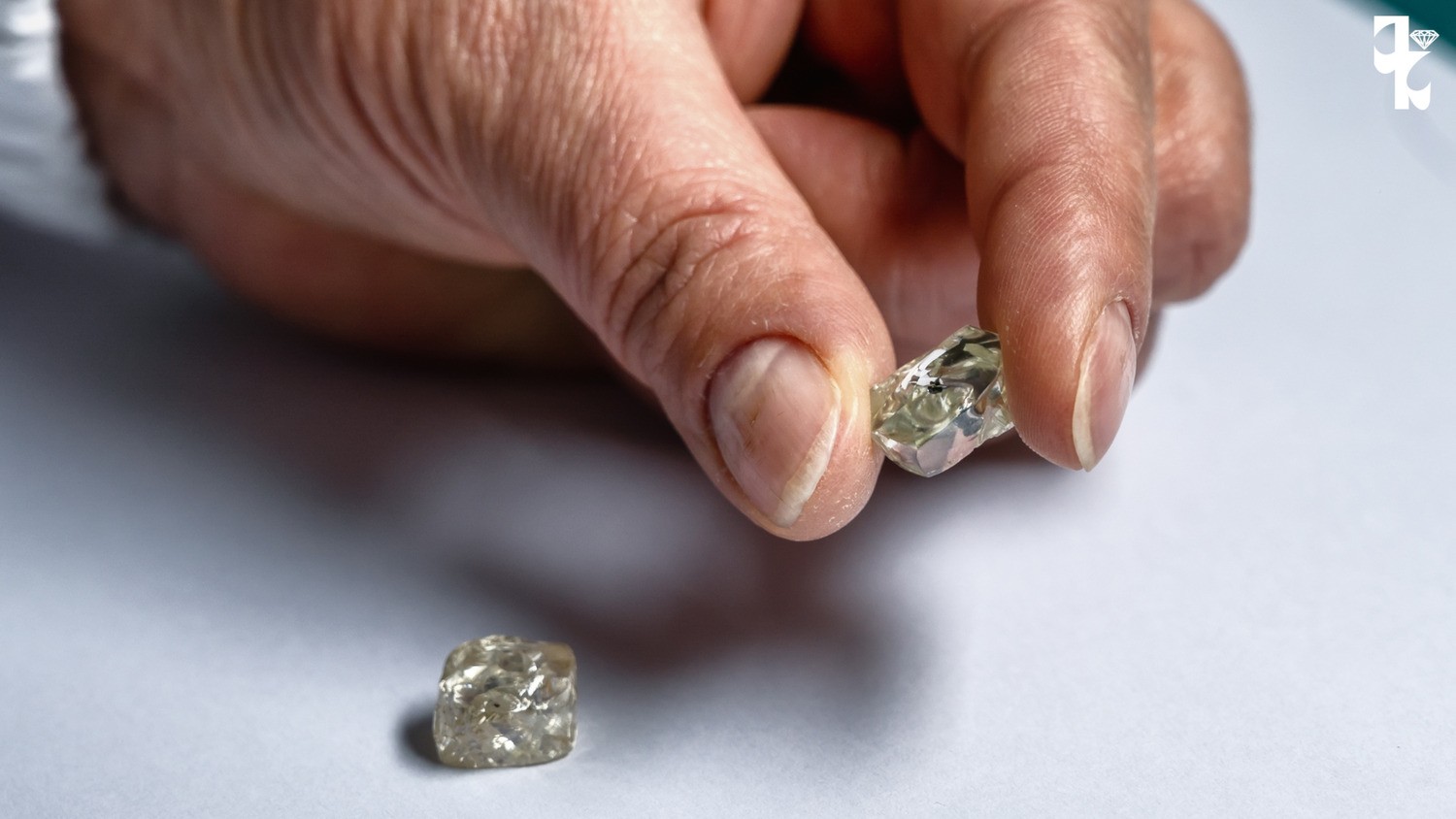
Polished Diamonds: The KP only tracks rough stones. Once a diamond is cut and polished, the KP paper trail ends completely. There is no KP certificate for finished jewelry.
Government-Led Abuses: If a legitimate government commits human rights violations, uses child labor, or engages in violence at a mine, those diamonds are still technically KP-compliant. The scheme only targets rebel groups, not states.
War-Torn Regions and State-Funded Conflicts: This is where the KP's limitations become most visible today, and the Russia-Ukraine situation is the clearest example. Russia is one of the world's largest diamond producers, accounting for roughly one third of global rough diamond supply. Its state-owned mining company, Alrosa, is partially owned by the Russian government. Since Russia's invasion of Ukraine in 2022, there has been an active debate about whether Russian diamonds should be classified as conflict diamonds, given that diamond revenues flow directly into the Russian state and, by extension, into the funding of the war. Under the KP's current definition, those diamonds are still certified as conflict-free because the definition only covers rebel movements, not state actors. Attempts to even table a discussion on the issue at KP meetings have been blocked repeatedly. At the 2025 KP Plenary in Dubai, Canada noted that for the fourth year in a row, Russia blocked participants from discussing the role that diamond revenues play in funding its war against Ukraine. The G7 countries responded by launching coordinated sanctions against Russian diamonds from January 2024, stepping outside the KP framework entirely because reform within it proved impossible. This situation, more than any other, illustrates the gap between what the KP was designed to handle and what the modern diamond trade actually faces.
Labor and Environment: The KP does not monitor wages, worker safety, or environmental destruction at mining sites. A mine can operate under dangerous conditions with no accountability under the scheme.

Colored Gemstones: Rubies, sapphires, emeralds, and all other colored stones are completely outside the KP's scope. There is no equivalent global certification scheme for the colored stone market, which is why gemological knowledge and trusted sourcing relationships carry so much weight in that part of the trade.
Enforcement Issues: The KP relies on self-reporting by member nations. There is no independent body to audit or inspect shipments, which creates obvious gaps in consistency and opens the door to circumvention.
The Industry Analogy
Think of the KP as a food safety stamp that guarantees ingredients weren't stolen by a gang. It’s a vital guarantee, but it doesn't tell you if the kitchen was clean, if the food is organic, or if the chef was treated fairly.
Why It Matters in 2026
The KP established a baseline. But as consumer expectations have shifted, the industry has started building systems that go considerably further.
De Beers Tracr is the most significant of these. Launched in 2018 and built on blockchain technology, Tracr creates an unalterable record of a diamond's journey from mine to market. Each diamond is assigned a unique digital identity that captures its carat weight, color, clarity, and cut. Over three million diamonds have now been registered on the platform at source. De Beers developed Tracr in collaboration with Accenture, and today registers over two-thirds of its global production by value on the platform.
Chow Tai Fook, one of Hong Kong's largest jewelry retailers, has also adopted blockchain tracking for its T Mark diamond brand. Their platform was developed by blockchain startup Everledger, allowing customers to access a diamond's digitised certificate of authenticity and supply chain journey through an app. Chow Tai Fook subsequently joined the Tracr platform as well, bringing together two of the world's most significant players in the diamond trade under a shared traceability standard.
The Responsible Jewellery Council (RJC) operates differently. Rather than tracking individual stones, it audits member companies against a broader set of ethical, social, and environmental standards. It is a third-party certification that covers how businesses operate, not just where stones come from.
Everledger, an independent blockchain platform, has also built significant traction in the space, working with insurers, retailers, and grading labs to create tamper-proof provenance records.

The important caveat with all blockchain-based systems is this: they are only as reliable as the data entered into them. If inaccurate information is recorded at the source, the blockchain preserves that inaccuracy perfectly. The technology is a tool, not a guarantee. Used honestly, it is a powerful one. Used carelessly, it creates a false sense of security.
For anyone entering the diamond trade today, understanding where the KP ends and these newer systems begin is part of being genuinely informed about how the industry is evolving.
The Bottom Line
A Kimberley Process certificate is a starting point, not a destination. It proves a diamond didn't fund a rebel war, but it does not automatically make a diamond "ethical" by modern standards. Professionals must understand these nuances to navigate today's market with integrity.


Recent Blog
J K Success Stories