


How to Build a Career in the Diamond Industry in India (Beginner to Expert)
Date :
Read Min :
Introduction: Why the Diamond Industry Is a Long-Term Business Opportunity
India occupies a unique position in the global diamond ecosystem, processing approximately 90% of the world's diamonds. This isn't just a statistic; it represents a massive, sustained business opportunity that has created generational wealth for thousands of families. Unlike trend-driven industries, diamonds represent a trade and business with centuries of proven resilience and consistent demand.
The diamond industry is fundamentally different from typical professions. It's not about landing a job; it's about building a business, whether you're trading stones, establishing a retail brand, or expanding an existing jewelry operation. This career path suits entrepreneurs with patience, jewelers looking to upgrade their offerings, and family businesses seeking to diversify into higher-value segments. Understanding what is a rough diamond and how the value chain works is the first step toward building expertise in this field.
Understanding the Diamond Industry Value Chain
The diamond business operates through a well-defined value chain, and understanding each stage reveals where business opportunities exist.
Rough Diamonds: The journey begins with rough diamonds; uncut, unpolished stones directly from mines. A rough diamond is a natural diamond crystal in its original form before any processing. Different types of rough diamonds include sawable (large crystals suitable for cutting into multiple polished stones), makeable (medium-sized crystals for single polished diamonds), and near-gem or industrial grade stones. Understanding rough diamond characteristics is crucial for traders who buy at this stage.
Polished Diamonds: After cutting and polishing, rough transforms into the brilliant gems consumers recognize. This stage involves significant value addition through craftsmanship and optimization of the 4Cs; Cut, Color, Clarity, and Carat weight. However, the 4Cs alone are not enough to survive in the competitive diamond market. Success requires understanding additional factors beyond the 4Cs—practical realities. These are the insights that come from hands-on experience and structured training, aspects often missed in purely theoretical knowledge but critical for making profitable buying and selling decisions.
Trading & Distribution: Polished diamonds move through networks of traders, wholesalers, and distributors. This is where most business opportunities exist for those without manufacturing infrastructure; buying, evaluating, and selling diamonds based on quality assessment and market knowledge.
Jewelry Integration: The final stage sees diamonds set into jewelry pieces, reaching end consumers through retail channels. This segment offers opportunities for jewelers to enhance their product offerings and capture higher margins.
Different Business Paths You Can Build in the Diamond Industry
The diamond industry offers multiple entrepreneurial paths beyond traditional employment:
Diamond Trading: Operating as a trader; whether locally or export-oriented requires capital, knowledge, and networks. Traders profit from understanding quality variations and market pricing better than buyers and sellers they connect.
Diamond Grading & Evaluation Services: Offering professional grading, certification interpretation, and quality verification services to jewelers, traders, and consumers builds a knowledge-based business with lower capital requirements.
Retail and Wholesale Diamond Jewelry: Establishing your own diamond jewelry brand or wholesale operation allows you to capture retail margins while building brand equity over time.
Supporting Businesses: Consulting services, sourcing facilitation for manufacturers, quality control services, and market intelligence provision serve the broader diamond ecosystem.
Expanding from Gold into Diamonds: Existing gold jewelers can leverage their customer base and retail infrastructure to move into higher-margin diamond jewelry, significantly upgrading their business profile.
Skills You Must Learn to Succeed in the Diamond Business
Success in the diamond business depends on specific competencies that function as business enablers:
Diamond Knowledge: Deep understanding of the 4Cs, quality factors, and how subtle differences impact value is non-negotiable. This knowledge directly affects your buying decisions and profit margins.
Pricing Logic and Valuation: Understanding how diamonds are priced based on quality parameters, market demand, and comparative analysis enables confident buying and competitive selling.
Sourcing and Supplier Networks: Building trusted relationships with reliable suppliers who provide consistent quality at fair prices is a competitive advantage that develops over time.
Trust, Certification, and Risk Management: Understanding certification standards, identifying potential issues, and managing the risks inherent in high-value transactions protects your capital and reputation.
Customer Confidence and Sales Credibility: Your ability to explain quality, justify pricing, and build trust with customers directly impacts sales conversion and repeat business.
Our Diamond Business Mastermind Program helps entrepreneurs and professionals build diamond businesses in a systematic, cost-efficient manner.
Product Knowledge: Master diamond grading (Indian & international standards), trading, valuation, quality checks for mounted jewelry, and JK's exclusive 7Cs and 7S evaluation method.
Marketing & Market Knowledge: Understand global markets, create execution-ready marketing blueprints, learn from successful brand case studies, launch your jewelry startup, master export strategies, and build the right business model (B2B, B2C, or D2C).
Business Systems & Scaling: Set up management systems, identify operational gaps, build systems that run without constant oversight, redefine your role for growth-focused leadership, and use ready-made templates and models to restructure for efficiency and scale.
For entrepreneurs serious about building scalable diamond businesses, comprehensive training programs like our Diamond Business Mastermind go beyond technical skills to cover market knowledge, execution-ready marketing strategies, business model selection (B2B, B2C, or D2C), operational systems, and scaling frameworks—providing the complete toolkit needed to succeed systematically and cost-efficiently.
Why Formal Diamond Training Is Critical for Business Success
Many aspiring diamond entrepreneurs underestimate the risks of informal learning. A single mistake in buying; overpaying by even 10-15% due to misgrading; can wipe out months of profit margins.
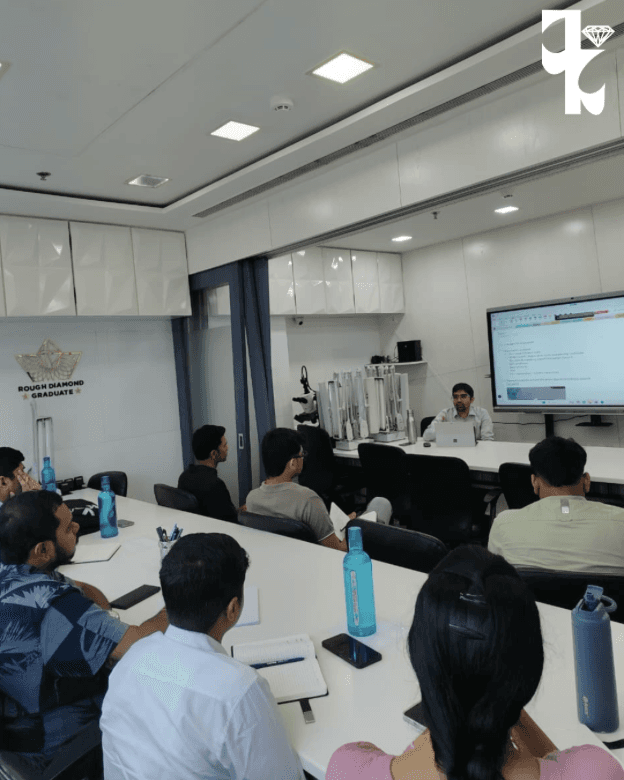
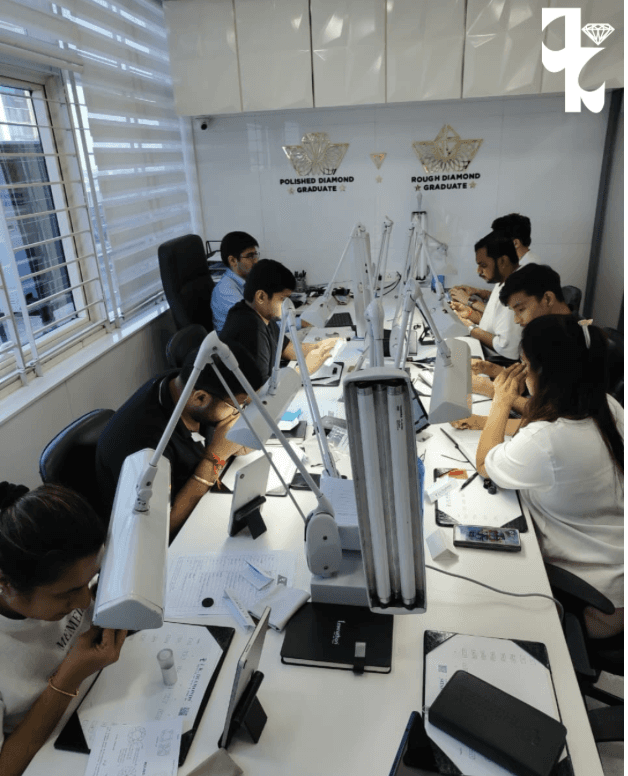
Structured training helps you avoid costly buying mistakes by teaching you to accurately assess quality, build credibility with suppliers who respect trained professionals over amateurs, scale confidently into higher-value stones without fear of making expensive errors, and develop professional understanding rather than surface knowledge that fails under pressure.
The difference between knowing diamonds casually and understanding them professionally is the difference between gambling and calculated business decisions. Formal training provides frameworks, systematic evaluation methods, and confidence that informal learning cannot replicate.
Can You Enter the Diamond Industry Without a Family Background?
The myth that diamond trading is exclusively for families with generational connections is outdated. While legacy access certainly helps, education, training, and strategic networking now provide alternative entry routes.
Modern entry typically follows this pattern: comprehensive training to build expertise, starting with small-scale trading to gain practical experience, gradually building supplier and customer networks through professionalism, and eventually expanding into retail or specialized services as capital and confidence grow.
Family background provides a head start, but professional knowledge and ethical business practices build sustainable advantages that ultimately matter more in long-term success. Take Saloni Nahar as a perfect example: she entered the diamond industry as a complete fresher with no family background in the business. After completing our Polished Diamond Course, she gained the expertise and confidence to launch her own startup, Adorna Jewelry Brand, proving that the right training can transform anyone into a successful diamond entrepreneur.

Building Trust and Authority in the Diamond Market
In the diamond business, trust is the real currency. Technical knowledge means little if customers and suppliers don't trust you.
Building authority requires certification knowledge that allows you to guide customers confidently, transparent practices in pricing and quality representation, ethical sourcing awareness that appeals to increasingly conscious consumers, and consistent expertise that builds your reputation over time.
Your expertise becomes your brand. In a business built on high-value transactions and repeat relationships, reputation developed through knowledgeable, honest dealings becomes your most valuable asset.
How to Start Small and Grow Gradually
Smart diamond entrepreneurs prioritize learning before investing heavily. Start by gaining thorough education and hands-on training, begin trading with limited inventory to minimize risk, combine diamonds with existing jewelry or retail operations to leverage current infrastructure, and avoid overexposure by gradually increasing inventory as knowledge and networks strengthen.
This measured approach allows you to learn from small mistakes rather than catastrophic ones, build confidence through successful transactions, and develop business judgment that only comes from real experience.
Common Mistakes New Diamond Entrepreneurs Make
New entrants frequently stumble by entering without proper training and making expensive buying errors, confusing diamonds with commodities and failing to understand quality nuances, becoming over-dependent on suppliers without developing independent evaluation skills, and ignoring grading and certification fundamentals that protect against fraud and misrepresentation.
Each of these mistakes is avoidable through proper preparation and structured learning before committing significant capital.
Is the Diamond Industry Future-Proof in India?
Rising disposable incomes are driving growing demand for diamond jewelry across India's expanding middle class. Today's consumers are increasingly informed, rewarding businesses that demonstrate genuine expertise over those relying on traditional sales tactics. This shift means expertise-driven businesses will dominate future market share.
The diamond industry's long-term relevance for trained professionals and entrepreneurs remains strong. As markets mature, knowledge becomes the differentiator, and those who invest in genuine expertise will capture disproportionate value.
Final Thoughts: Diamonds as a Knowledge-Driven Business
The diamond industry rewards knowledge, patience, and credibility above all else. Quick riches are rare; sustainable success comes from deep understanding, ethical practices, and consistent value delivery to customers.
The right training is the foundation of a successful diamond career. It transforms diamonds from an intimidating, high-risk venture into a calculated business opportunity where your expertise directly determines outcomes.
Approach diamonds as a serious business, not speculation. Invest first in knowledge, then in inventory. Build relationships alongside expertise. The diamond industry offers tremendous opportunities for those willing to learn properly and build systematically.
Ready to build your foundation in the diamond business? Enroll with J K Diamonds Institute for professional training that transforms beginners into confident diamond entrepreneurs. With nearly 36 years of excellence and 12,000+ alumni across 40+ countries, we provide the structured learning, practical exposure, and industry credentials you need to succeed.


Recent Blog
J K Success Stories